
Copper range
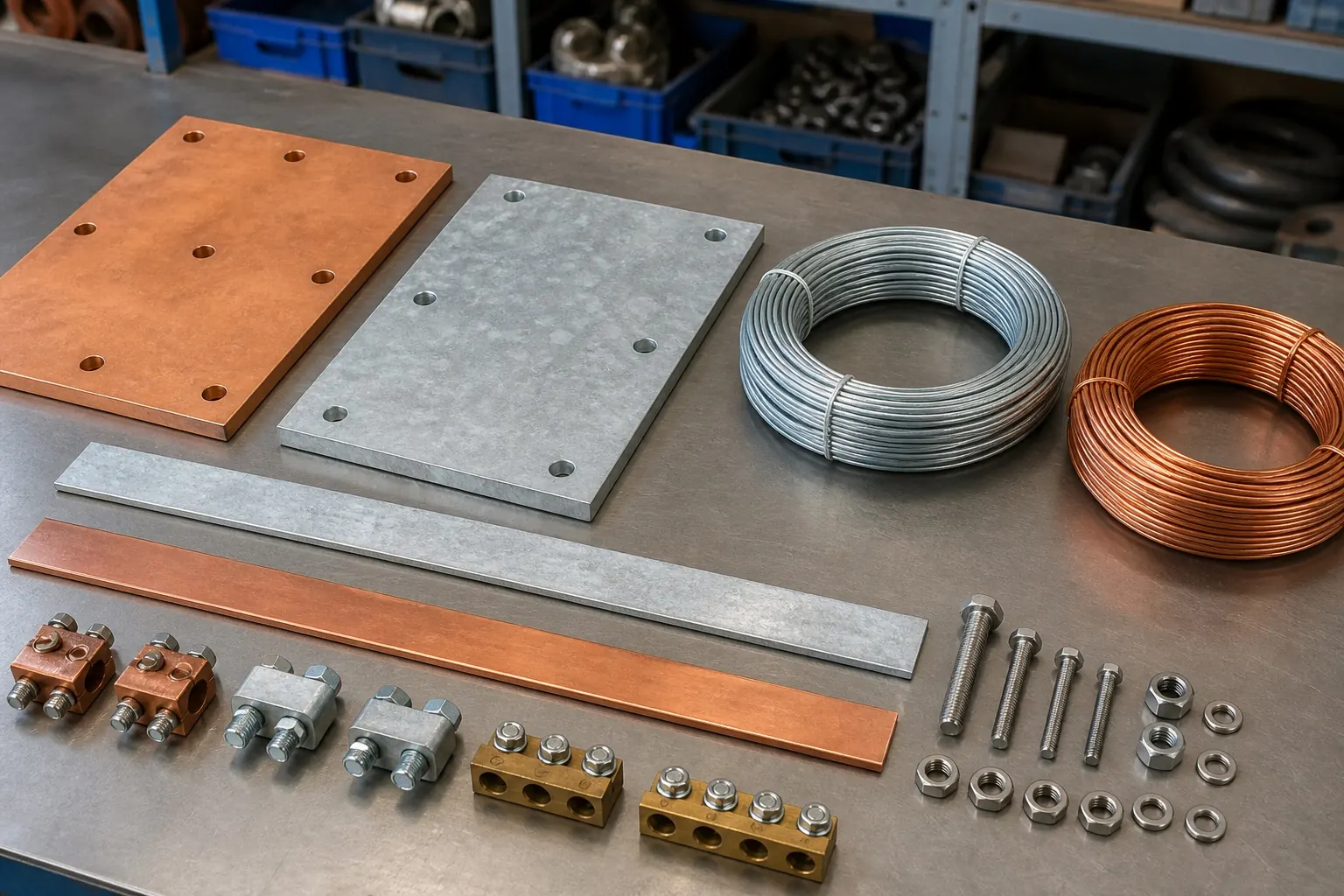
Copper plates, strips, braided conductors, wires and connection hardware for specified applications.
Earthing materials
Copper and GI plates, strips, wires, rods, clamps and backfill compound for electrical earthing work across Rajasthan.
Discuss your requirementStart here
An electrode alone is not a complete package. Plates, strips, wire, clamps, test links, inspection covers and conductive backfill must suit the same current path and corrosion conditions.
3E Solutions supplies copper and GI earthing materials from Jaipur for industrial, solar and building work. We prefer to see the drawing first, because mismatched metals and undersized joints are quiet problems until they are not.
Copper plates, strips, braided conductors, wires and connection hardware for specified applications.
GI plates, strips, pipes and wire for practical industrial and building earth networks.
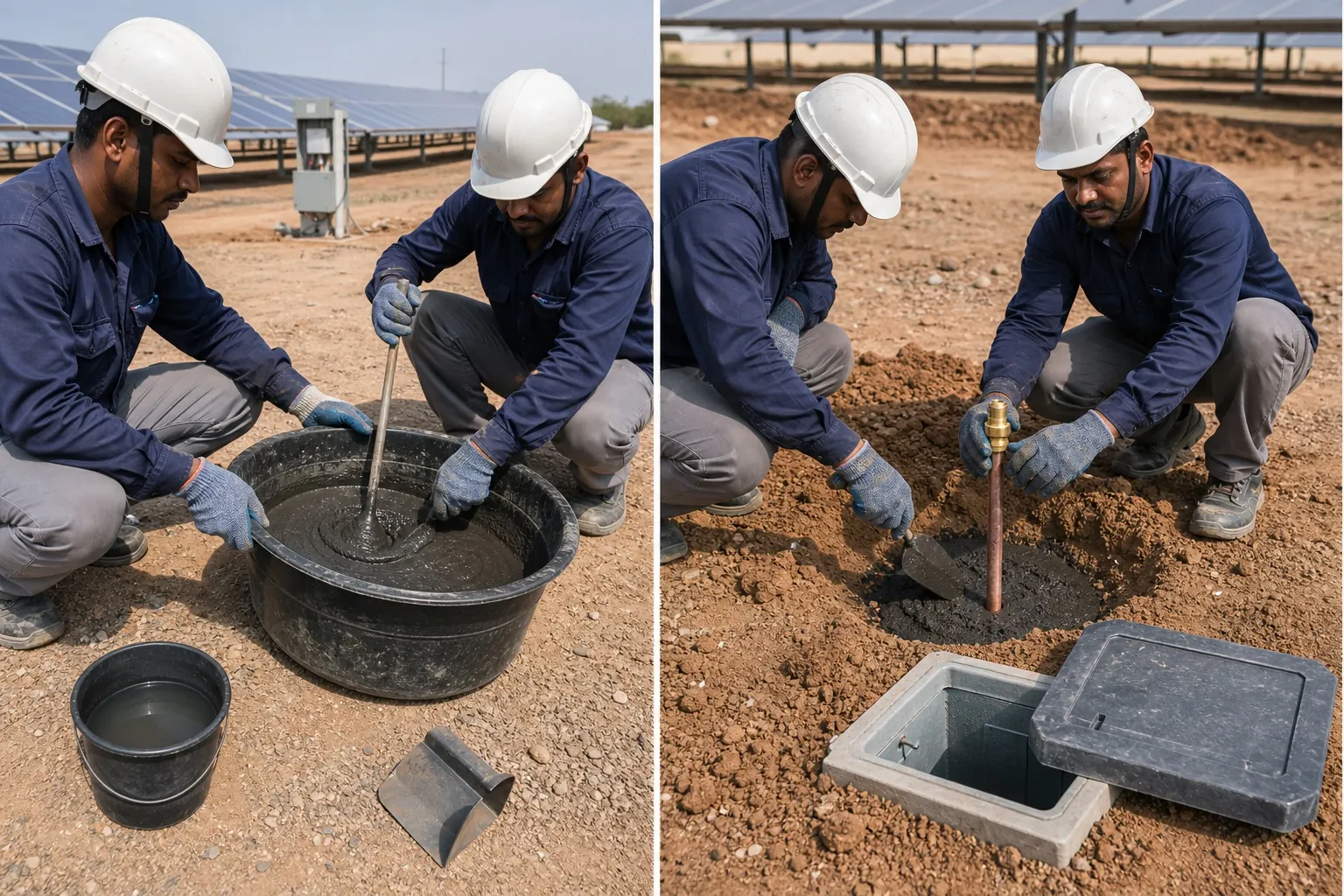
Conductive compound for chemical earthing pits where the design calls for stable contact with surrounding soil.
Technical view
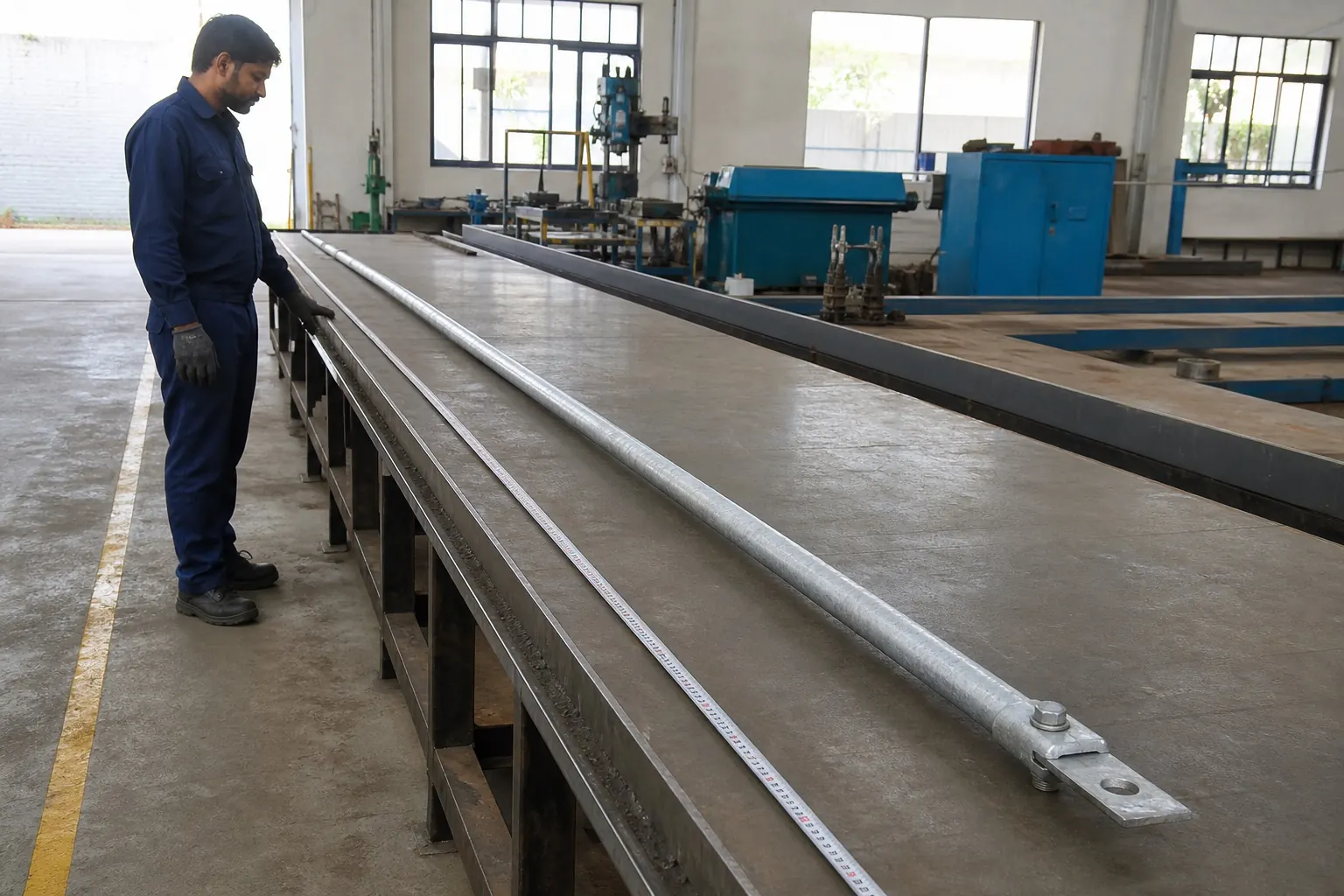
Copper and galvanized steel do not behave as one metal when moisture reaches their joint. The approved connection method, compatible clamp and access for inspection need to be fixed before the route is covered.
A useful bill of materials separates conductor, electrode connection, test point and inspection cover. It also states which items are supply-only and which need site supervision or testing.
The supplied company profile describes a crystalline conductive compound based on graphite and bentonite. An independent report listed conductivity of 3500 microsiemens per centimetre and sulphur content of 1.47 percent for the tested sample.
Those figures belong to that report. They do not promise one resistance value at every site, because soil, depth, spacing and connection quality still control the installed result.
Explore this product family
Specification
Final dimensions belong on the project schedule. These are the main product families that 3E Solutions can assemble into the bill of materials.
Method
Begin at the single-line drawing, then walk the route. Small omitted joints and test points cause more delay than a missing metre of strip.
Separate protective earth, neutral earth and lightning duties where the design requires it.
Count real conductor lengths, bends, joints and test points instead of relying on a round estimate.
Review interfaces carefully so avoidable galvanic corrosion is not built into the network.
Connections and test links need to remain reachable after civil work is finished.
Questions from site and procurement teams
Yes. The documented range includes copper and GI plates, strips, wires, rods and clamps, plus conductive backfill compound and pit materials against the project schedule.
The 3E installation manual says to mix the compound with water before placement. Dry powder poured near the inspection cover does not represent that method.
No. The conductor materials, section sizes, current duty and corrosion exposure decide the connection. State both metals and dimensions in the enquiry.
Bring us the site details
Share the drawing and conductor schedule. We can separate plates, strips, wire, clamps, backfill and inspection items before the order is placed.
Contact 3E Solutions